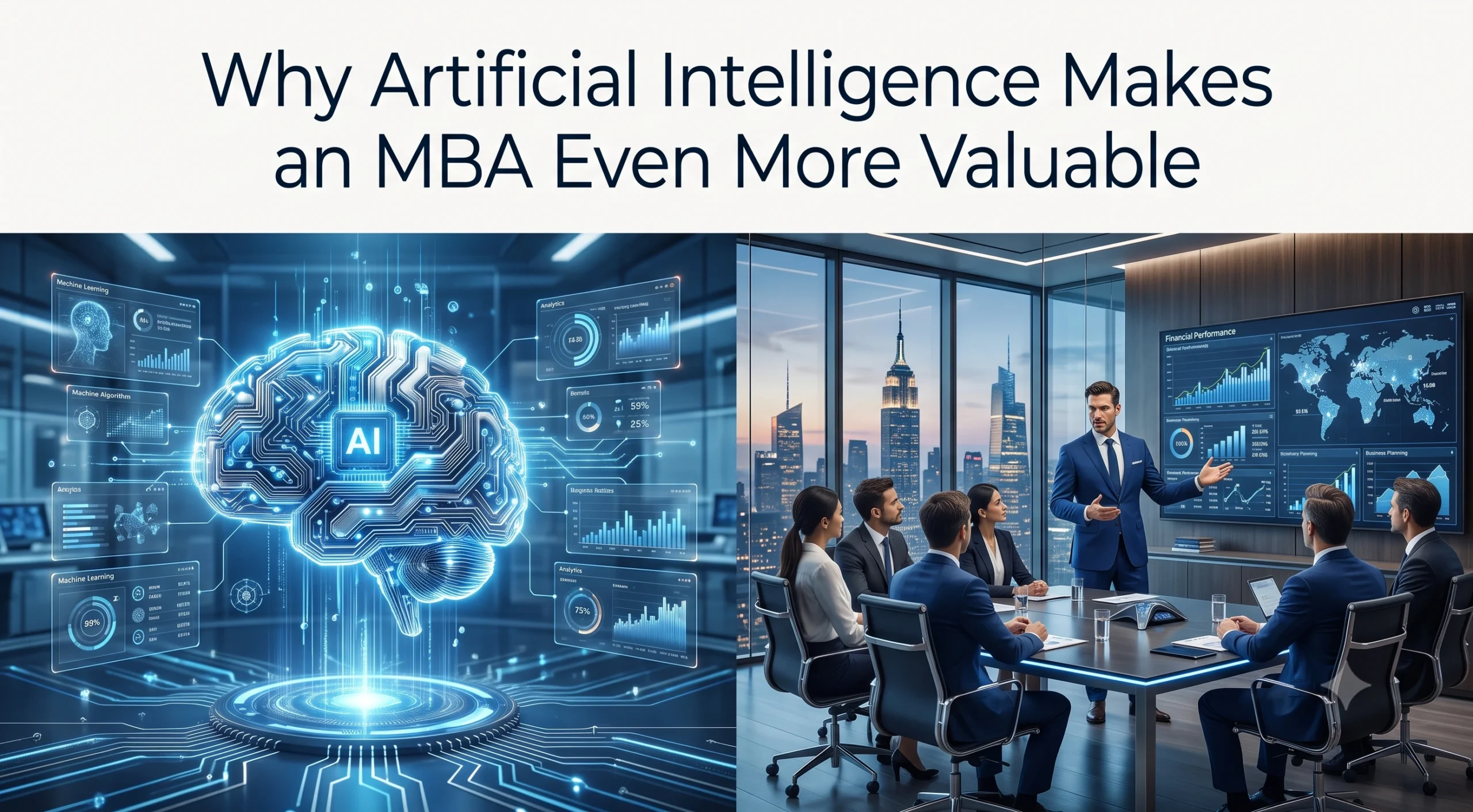



Today, every industry, is seeing the impact of Artificial Intelligence, transforming the very way the industry function. Engineers have traditionally been at the forefront of technological innovation. However AI is changing not only how products are made or services are delivered but AI is also changing the approach by which businesses make decisions, the format customers are served and can forecast demand, and allocate resources efficiently.
It is a well accepted fact that, AI can consume and analyze large volumes of engineering data, optimize manufacturing processes, predict equipment failures, automate quality inspections, and even assist in product design, inspired from consumer specified parameters. However, implementing AI successfully is no longer exclusively within the realm of technical expertise.
Companies need professionals who can answer questions such as:
- Which AI initiatives provide the optimal business value?
- What return on investment -ROI can be expected?
- How should AI projects be identified and prioritized?
- What organizational and system changes are required?
- What ethical and governance issues must be addressed?
- How should available work force be trained to work alongside AI?
These are management questions rather than purely engineering questions. Consequently, engineers who combine technical expertise with MBA-level business knowledge are increasingly well positioned to lead digital transformation initiatives within their organizations.
Engineers Make Excellent Entrepreneurs
As historical evidence will confirm, many successful businesses have been founded by engineers.
The trained mind of Engineers naturally identifies technical problems and frequently develops innovative solutions. However, building an innovative product represents crucial but only initial first stage of creating a successful business.
Entrepreneurship also requires:
- Identifying target markets,
- Understanding customer behaviour,
- Developing pricing strategies,
- Raising investment,
- Managing cash flow,
- Building high-performing teams,
- Marketing products effectively,
- Scaling operations sustainably.
But then again history demonstrates that many technically brilliant inventions failed commercially because their creators lacked appreciation and understanding of markets and customers. Conversely true is the statement that many successful entrepreneurs combined technical innovation with strong business leadership.
An MBA equips engineers with these complementary capabilities, enabling them to convert technical innovation into commercially successfully and sustainable ventures.
Career Opportunities Expand Significantly
An engineering qualification prepares an individual for technical roles and responsibilities within a specific discipline like Mechanical, Civil, Instrumentation etc., while an MBA broadens and often upgrades these opportunities into leadership and management roles across several sectors. Professionals possessing both qualifications often progress into roles such as:
- Engineering Manager
- Operations Manager
- Project Director
- Product Manager
- Supply Chain Manager
- Plant Manager
- Strategy Consultant
- Business Development Manager
- General Manager
- Chief Operations Officer (COO)
- Chief Executive Officer (CEO)
Rather than replacing technical expertise, the MBA allows engineers to influence broader organizational decisions and contribute at executive level.
Engineering Plus MBA: A Powerful Combination
- Engineering trains professionals how systems work.
- An MBA teaches professionals how businesses work.
- Engineering develops technical competence.
- An MBA develops commercial competence.
- Engineering focuses on efficiency.
- An MBA focuses on effectiveness.
- Engineering seeks the best technical solution.
- An MBA seeks the best viable and sustainable business solution.
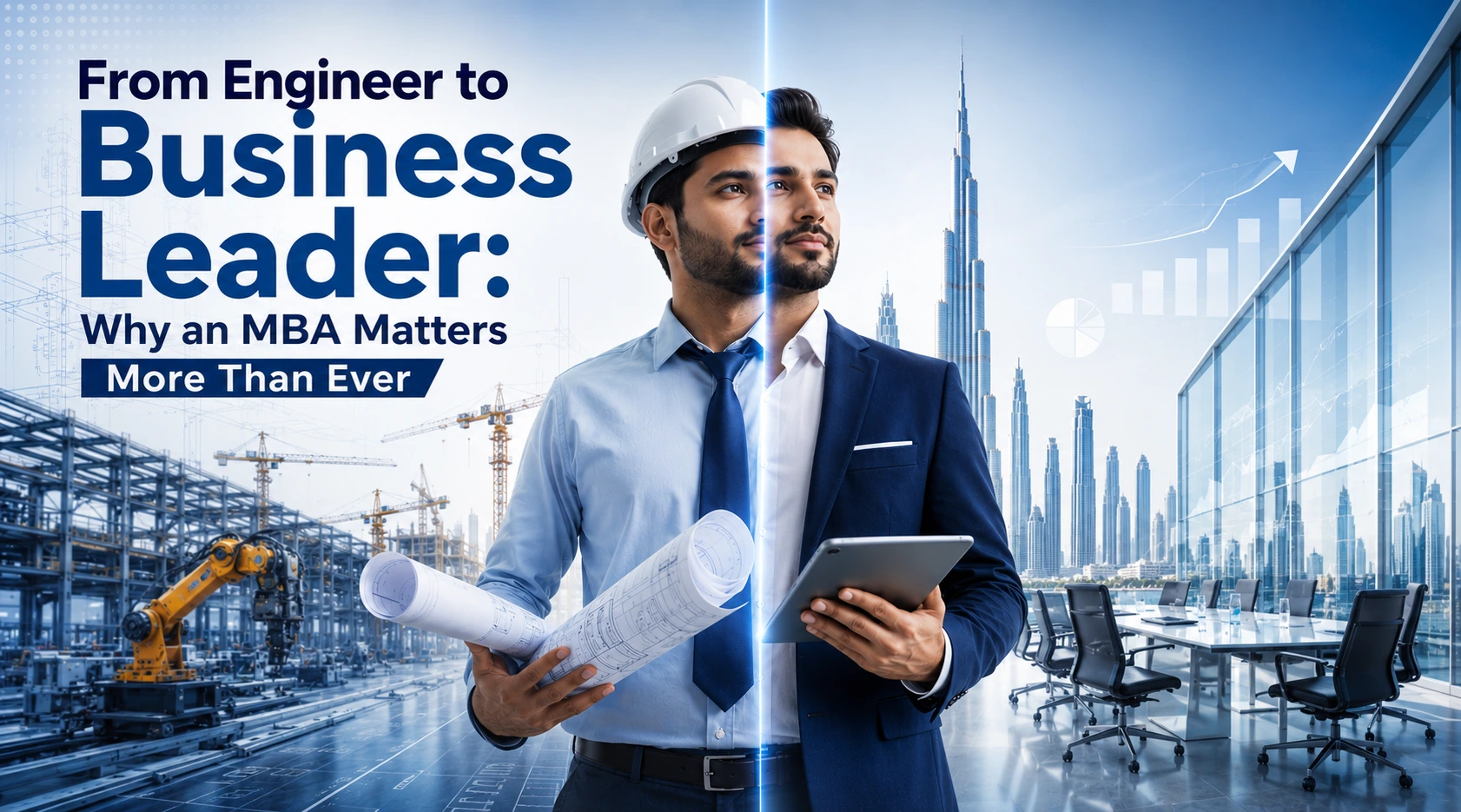
Together, these two disciplines create professionals capable of understanding both technology and strategy, a combination that is practical and much sought out and valued in today’s knowledge economy. These capabilities are among the key skills you gain from an MBA as a working professional.
Continuous Learning Is Becoming a Career Necessity
As is clearly evident, technology is evolving faster now, than at any point in history.
Artificial Intelligence, renewable energy, robotics, automation, advancement in manufacturing and biotechnology, and digital transformation continue to reshape industries worldwide. So it follows that professional training is no longer a one-time investment but an ongoing process, and consequently, so is achievement, an ongoing process.
For engineers and technicians, seeking e management skills is more of a strategic investment in long-term employability rather than mere career enhancement exercise.
An MBA from reputed Universities, especially from UK, provides structured exposure to leadership, strategic thinking, financial management, organizational behavior, marketing, innovation, and business analytics competencies that remain relevant regardless of technological change, be it the mature European markets or upcoming middle east cities like Dubai, Abu Dhabi or Bahrain.
The MBA Is No Longer Only About Business
Modern MBA programs have evolved considerably.
While they continue to cover traditional disciplines such as:
- Strategic Management
- Corporate Finance
- Marketing
- Human Resource Management
- Operations and Supply Chain Management
- Research and Business Analytics
Many institutions are now integrating contemporary topics including:
- Artificial Intelligence in Business
- Digital Transformation
- Sustainability
- Data-Driven Decision Making
- Innovation Management
- Entrepreneurship
- Business Intelligence
This evolution reflects the reality that modern business leaders must be capable of managing both people and technology, including AI in Action: Turning Customer Data into Business Growth.
For engineers, this creates an ideal opportunity to complement their technical expertise with managerial capability.
Conclusion
Engineering and business, earlier viewed as two sides of the coin and increasing viewed simultaneously as the same coin. It is the meeting of two rivers. Modern organizations require trained professionals who understand both technology and management, and who can practically translate technical innovation into commercial success.
An MBA does not attempt to replace engineering knowledge; rather tops it up to expand its application. It enables engineers and technicians to move beyond solving day to day technical problems and contribute to strategic planning, organizational leadership, innovation, and ultimately business growth.
The emergence of Artificial Intelligence further strengthens this need. While AI can automate many routine technical and analytical tasks, companies, have to continue to depend on skilled professionals who are leaders and can make strategic decisions, manage change, lead multidisciplinary teams, and harness technology to achieve set business objectives.
For engineers and technicians aspiring to greater leadership responsibilities, entrepreneurial ventures, or executive careers, an MBA is no longer a fancy degree but an complementary essential qualification to technical expertise and a pathway toward broader professional opportunities.
Frequently Asked Questions
Yes. An MBA complements engineering knowledge by developing leadership, finance, marketing, strategic thinking, and business decision-making skills that are increasingly required in senior technical and managerial roles.
Mechanical, Civil, Electrical, Electronics, Computer, Chemical, Industrial, and Software Engineers, as well as technicians and technologists seeking leadership or management responsibilities, can all benefit from an MBA.
It depends on career objectives. Many professionals gain greater value from an MBA after acquiring several years of industry experience, allowing them to relate management concepts to real workplace challenges.
Yes. While engineering develops technical innovation, an MBA provides knowledge in marketing, finance, operations, business strategy, and leadership that supports the successful commercialization and growth of a business.
No. AI is changing how organizations operate, but it increases the need for leaders who understand both technology and business. Professionals who can combine engineering expertise with strategic management are likely to remain in high demand.
Yes, provided they meet the admission requirements of the institution or university. An MBA can broaden career opportunities by developing management and leadership capabilities alongside existing technical expertise.
